
JIPMER 2014
- Exam
- JIPMER
- Year
- 2014
- Subject
- Botany
- Chapter
- Morphology of Flowering Plants
JIPMER 2014 · Botany · Morphology of Flowering Plants
Three floral diagrams are given here. Their respective families are...
Three floral diagrams are given here. Their respective families are assigned in the answer key. Find out the families to which these diagrams belong to
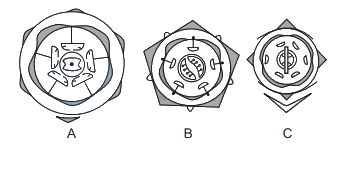
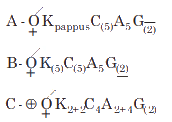
Options
- AA-Liliaceae, B-Asteraceae, C-Solanaceae
- BA-Asteraceae, B-Solanaceae, C-Brassicacea
- CA-Asteraceae, B-Solanaceae, C-Asteraceae
- DA-Poaceae, B-Solanaceae, C-Asteraceae
Correct answer
B. A-Asteraceae, B-Solanaceae, C-Brassicacea
Step-by-step solution
'Pappus', a hairy structure is a modification of calyx and is the characteristic feature of family-Asteraceae.
So,
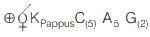
of family-Asteraceae. Calyx 5, gamosepalous, persistant, corolla 5, gamopetalous. Androecium 5, polyandrous and gynoecium bicarpellary and syncarpous are the diagnositc feature of family-Solanaceae, shown by floral formula Calyx 4, polysepalous and arranged in 2 whorld of 2 each, corolla 4, polypetalous and cruciform.
Androecium 6, polyandrous, tetradynamous.
Gynoecium, bicarpellary, syncarpous and superior, placentation parietial with a partition calledreplum.
These are the diagnostic feature of family-Brassicaceae or Cruciferae, shown by floral formula
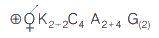
of family-Asteraceae. Calyx 5, gamosepalous, persistant, corolla 5, gamopetalous. Androecium 5, polyandrous and gynoecium bicarpellary and syncarpous are the diagnositc feature of family-Solanaceae, shown by floral formula