
NEET 2013
- Exam
- NEET
- Year
- 2013
- Subject
- Zoology
- Chapter
- Structural Organisation in Animals
NEET 2013 · Zoology · Structural Organisation in Animals
Which one of the following is one of the paths followed by air or...
Which one of the following is one of the paths followed by air or during respiration in the adult male Periplaneta americana as it enters the animal body?Spiracle in metathorax, trachea, tracheoles, oxygen diffuses into cells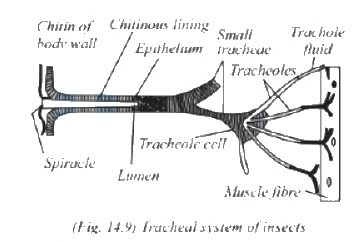
Options
- ASpiracle in metathorax, trachea, tracheoles, oxygen diffuses into cells
- BMouth, bronchial tube, trachea, oxygen enters cells
- CSpiracles in prothorax, tracheoles, trachea, oxygen diffuses into cells.
- DHypopharynx, mouth, pharynx, trachea, tissues
Correct answer
A. Spiracle in metathorax, trachea, tracheoles, oxygen diffuses into cells
Step-by-step solution
The trachea is a dense array of a network of air tubes found in the internal system. Tracheae are known to balance the pressure inside the system. When oxygenrich air enters into the body of the cockroach via spiracles into the tracheal tubes, it diffuses into
various tissues and cells of the body. Here, oxygen is used up to liberate energy. Likewise, carbon-dioxide rich air passes into the trachea and moves to the outwards through the spiracles. Carbon dioxide is given out as a result of the respiratory process. (Ref. to Fig. 14.9)
Related Theory The exchange of gases depends on the metabolic rate and temperature. When air enters the tracheoles, oxygen diffuses faster into the tissues due to its high partial pressure. At the same time the carbon dioxide of tissues, instead of passing into the tracheal system, goes into the haemolymph. Carbon dioxide is carried more quickly into the haemolymph due to its greater solubility in it. This carbon dioxide accumulates near the spiracles and diffuses in to the atrial chambers near the spiracles and goes out in bursts through the abdominal spiracles.
Related Theory The exchange of gases depends on the metabolic rate and temperature. When air enters the tracheoles, oxygen diffuses faster into the tissues due to its high partial pressure. At the same time the carbon dioxide of tissues, instead of passing into the tracheal system, goes into the haemolymph. Carbon dioxide is carried more quickly into the haemolymph due to its greater solubility in it. This carbon dioxide accumulates near the spiracles and diffuses in to the atrial chambers near the spiracles and goes out in bursts through the abdominal spiracles.