Quantrex Quantrex AcademyJEE · NEET · NDA PYQs with solutions Open app
NEET
Exam
NEET
Subject
Physics
Chapter
Ray Optics

NEET · Physics · Ray Optics

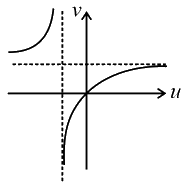
For a concave lens of focal length f , the relation between object...

For a concave lens of focal length ff, the relation between object and image distance uu and v,v, respectively, from its pole can best be represented by (u=vu = v is the reference line):For a concave lens of focal length f , the relation between object and image distance u and v, respectively, from itsFor a concave lens of focal length f , the relation between object and image distance u and v, respectively, from itsFor a concave lens of focal length f , the relation between object and image distance u and v, respectively, from itsFor a concave lens of focal length f , the relation between object and image distance u and v, respectively, from itsFor a concave lens of focal length f , the relation between object and image distance u and v, respectively, from its

Options

  1. AA metal M readily forms its sulphate MSO_4 which is water - soluble. It forms its oxide MO which becomes inert on
  2. BA metal M readily forms its sulphate MSO_4 which is water - soluble. It forms its oxide MO which becomes inert on
  3. CA metal M readily forms its sulphate MSO_4 which is water - soluble. It forms its oxide MO which becomes inert on
  4. DA metal M readily forms its sulphate MSO_4 which is water - soluble. It forms its oxide MO which becomes inert on

Correct answer

A. A metal M readily forms its sulphate MSO_4 which is water - soluble. It forms its oxide MO which becomes inert on

Step-by-step solution

From the lens formula, 1v−1u=1f\dfrac{1}{v} - \dfrac{1}{u} = \dfrac{1}{f}

⇒v=f−f2u+f⇒ v = f - \dfrac{{f}^{2}}{u + f}

 now, if we plot a graph between uandvu\text{and}v

For a concave lens of focal length f , the relation between object and image distance u and v, respectively, from its

When u→∞;v=f−f2∞=fu \to \infty ; v = f - \dfrac{{f}^{2}}{\infty} = f

and for u→0;v=0u \to 0; v = 0

Given that u=vu = vis a reference line, therefore, dvdu=0+f2(u+f)2\dfrac{d v}{d u} = 0 + \dfrac{{f}^{2}}{{\left(u + f\right)}^{2}}

dvduu=0=0+f2(0+f)2=1{\dfrac{d v}{d u}}_{u = 0} = 0 + \dfrac{{f}^{2}}{{\left(0 + f\right)}^{2}} = 1

The equation of tangent of the curve at the origin, v−0=1(u−0)⇒v=uv - 0 = 1\left(u - 0\right) ⇒ v = u

Practice Ray Optics on Quantrex Academy →

More from Ray Optics

A container is filled with water (μ = 4/3 ) up to a height of 24 cm. A concave mirror is… MHT CET Medical 2026The refracting angle of a prism is 'A' and its refractive index is ((A)/(2)). The minimum… MHT CET Medical 2026A circular beam of light having diameter 'd' falls on a plane liquid surface from air.… MHT CET Medical 2026What is the total optical path length of two media in contact with thicknesses of d and… MHT CET Medical 2026A beam of white light is allowed to pass through convex lens parallel to principal axis… MHT CET Medical 2026The angle of minimum deviation produced by a thin prism in air is δ_1 . What will be the… MHT CET Medical 2026A ray of light passes through four transparent media with refractive indices μ_1 , μ_2… MHT CET Medical 2026The thin prism having refracting angle 10^ ^ ∘ is made of glass of refractive index 1.42… MHT CET Medical 2026 Full Ray Optics list All NEET PYQs