
NEET 2026
- Exam
- NEET
- Year
- 2026
- Subject
- Physics
- Chapter
- Rotational Motion
NEET 2026 · Physics · Rotational Motion
A solid sphere A of radius R and mass M is attached at a point to a...
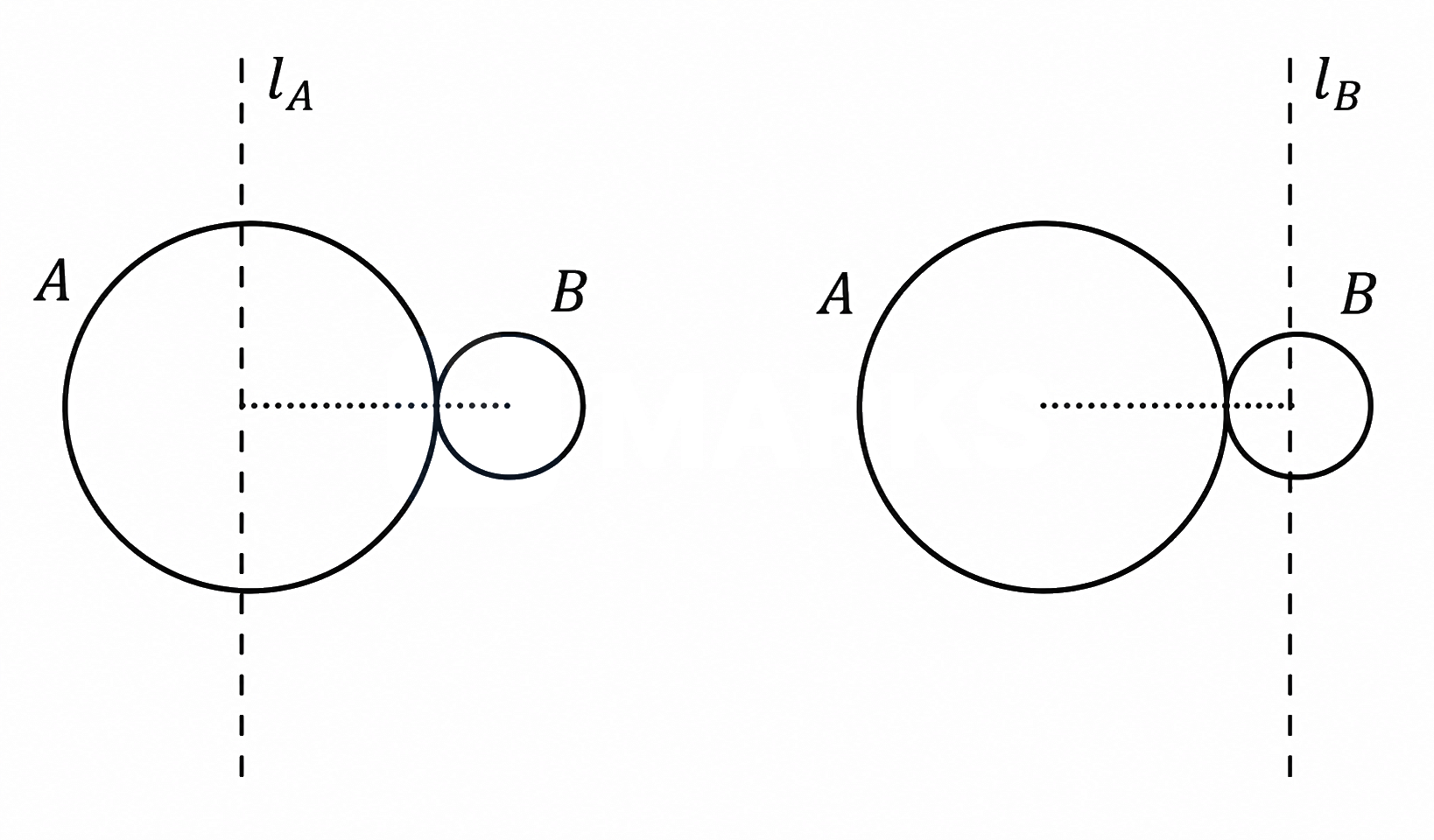
A solid sphere of radius and mass is attached at a point to a smaller solid sphere of radius and mass . Assume that the line joining their centres lies along the horizontal. The moment of inertia of the system calculated about a vertical axis passing through the centre of is and that calculated about a vertical axis passing through the centre of is . The difference is :
Options
- A
- B
- C
- D
Correct answer
C.
Step-by-step solution
The distance between the centres of the two spheres and is .
Let and be the moments of inertia of spheres and about their respective vertical centroidal axes. For solid spheres, and .
The moment of inertia of the system about a vertical axis passing through the centre of is given by the sum of the moment of inertia of about its own centre and the moment of inertia of about the centre of . Using the parallel axis theorem:
Similarly, the moment of inertia of the system about a vertical axis passing through the centre of is:
Now, finding the difference :
Answer: