Quantrex Quantrex AcademyJEE · NEET · NDA PYQs with solutions Open app
NEET 2013
Exam
NEET
Year
2013
Subject
Zoology
Chapter
Body Fluids and Circulation

NEET 2013 · Zoology · Body Fluids and Circulation

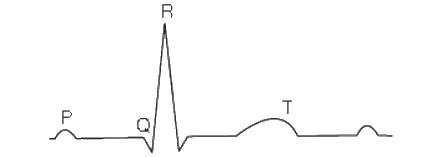
The diagram given here is the standard ECG of a normal person. The...

The diagram given here is the standard ECG of a normal person. The P-wave represents the The diagram given here is the standard ECG of a normal person. The P-wave represents the
Options

  1. Acontraction of both the atria
  2. Binitiation of the ventricular contraction
  3. Cbeginning of the systole
  4. Dend of systole

Correct answer

A. contraction of both the atria

Step-by-step solution

In ECG, P-wave represents the depolarisation of atria, which leads to the contraction of both atria. T-wave represents the return of ventricles from excited to normal state. The QRS complex represents the depolarisation of the ventricles, which initiates ventricular contraction. The contraction starts shortly after QQ and marks the beginning of systole.
Practice Body Fluids and Circulation on Quantrex Academy →

More from Body Fluids and Circulation

The WBC count of a person's blood sample is 8000 /cu.mm. How many eosinophils and… NEET 2026Which of the following statements is incorrect ? NEET 2026The opening between the right atrium and the right ventricle is guarded by __________. NEET 2026The number of action potentials generated by sino-arterial node (SAN) in a healthy human… NEET 2026Select the incorrect statements with reference to Rh grouping : A. Erythroblastosis… NEET 2026Cardiac activities of the heart are regulated by: A. Nodal tissue B. A special neural… NEET 2025'Lub' sound of Heart is caused by the ______ NEET 2024Following are the stages of pathway for conduction of an action potential through the… NEET 2024 Full Body Fluids and Circulation list All NEET PYQs